


Discussions
Apr 2026
What Institutions Actually Need From Crypto Startups: 5 Lessons From the DAS
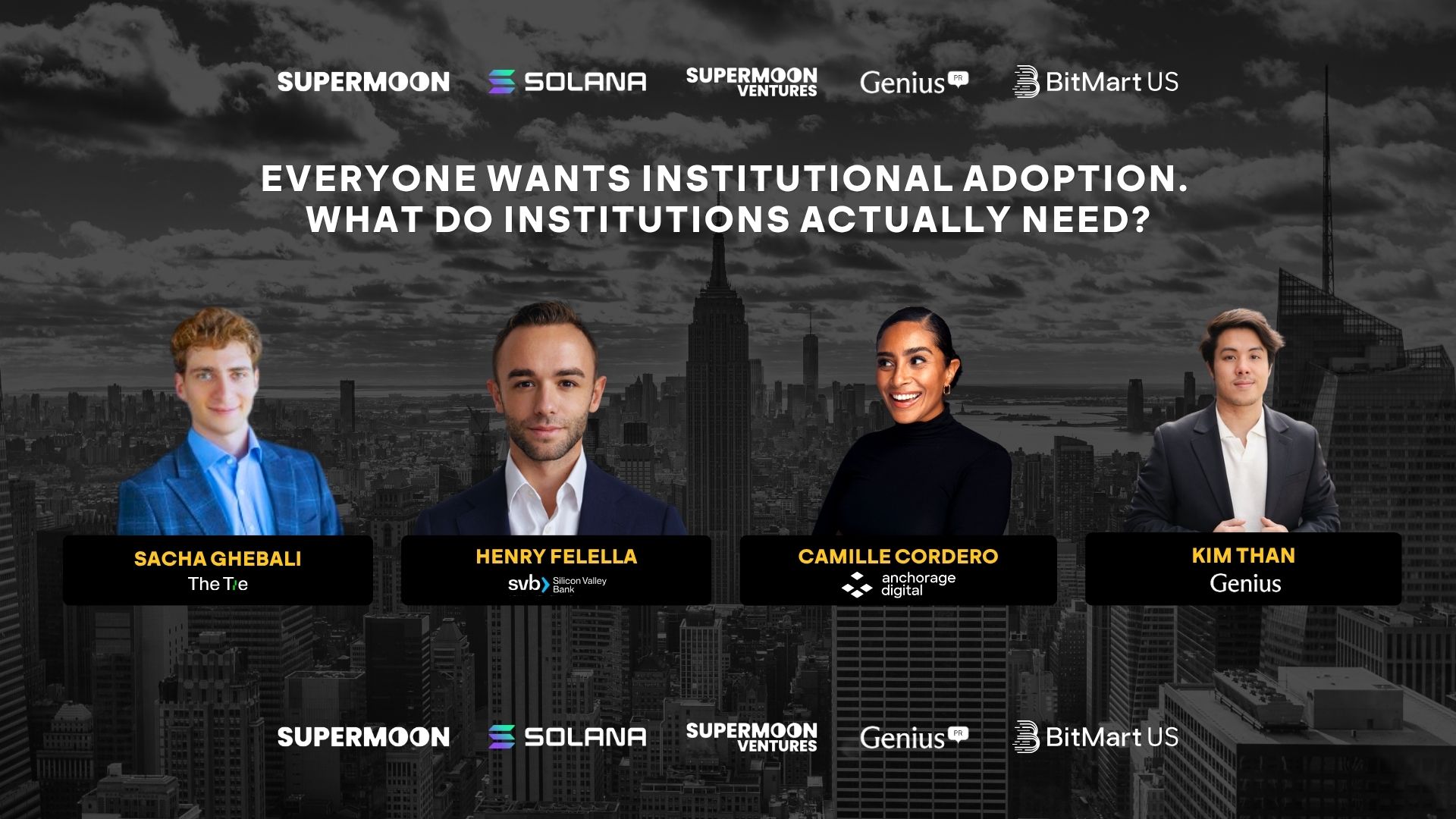
Institutional adoption is the industry's favorite buzzword. But what does it actually take to win an institution's business? Four operators who do it every day broke it down at our Supermoon's Startup x Capital Forum during Digital Asset Summit NY.
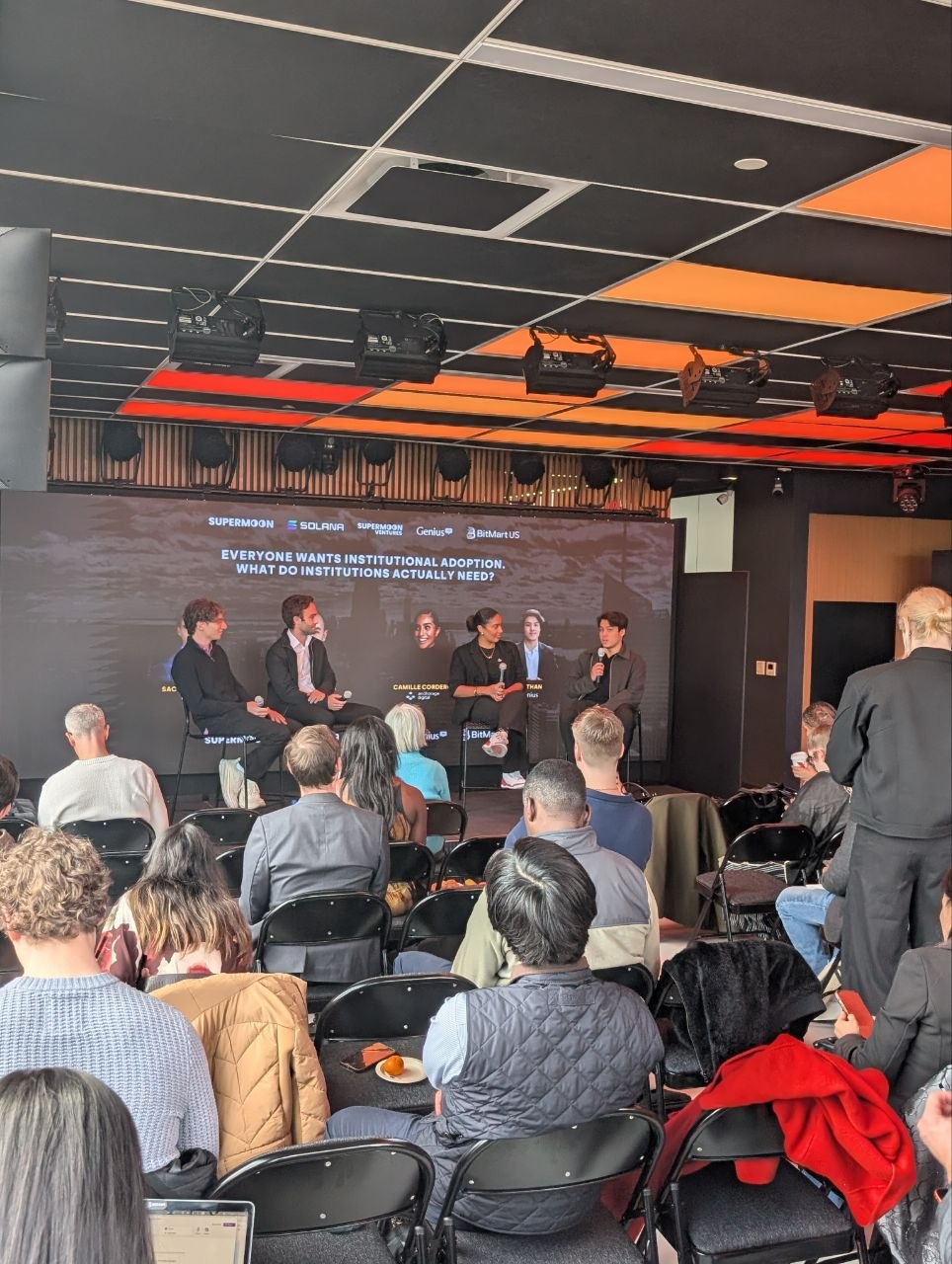
At Supermoon’s "Everyone Wants Institutional Adoption. What Do Institutions Actually Need?" DAS NYC panel, Camille Cordero (Global Head of Relationship Management, Anchorage Digital), Henry Felella (VP Crypto, Silicon Valley Bank), Sacha Ghebali (Chief Strategy Officer, The Tie), and moderator Kim Than (CEO, Genius PR) shared the playbook that most founders never hear until it's too late.
Here's what stood out.
Find a Champion Inside the Institution, or Stay Stuck in Purgatory
The panel's consensus starting point was blunt: if you don't have an internal advocate, you're going nowhere.
Henry Felella put it plainly: "If you don't have a champion internally, you're kind of stuck in purgatory of getting looped around different email addresses."
His advice? Invest conference time not in pitching, but in finding that one person who will carry your name through the internal maze. And don't overlook the people who control access. "EAs are your best friend. They are the ones who control all of the executives' calendars. Make friends with them. Bring them cookies."
Camille Cordero went deeper on the mapping exercise. Before you even start selling, she said, you need to understand who the decision-makers are, who the influencers are, and who the naysayers are. Build an organizational map. Then figure out who will actually get you to a signed contract.
Sacha Ghebali added a crypto-specific angle: "Build trust with the younger employees. They are typically the ones closer to the ground and the in-house experts. They'll be listened to a lot more than in a traditional context."
Get Your Licensing in Order Before You Even Pick Up the Phone
Both Felella and Cordero independently landed on the same point before anything else: regulatory clarity is non-negotiable.
"If you don't have your proper licensing, you're not getting in the door," Felella said. "If you are facilitating money movement and you are required to have an MSB or your MTL licensing, not only will banks not entertain the conversation, broader financial institutions won't either."
Cordero framed it as the literal first step of the sales cycle. Know your jurisdiction. Know your "why." Have your governance controls ready. Without that, the conversation doesn't start.
Ghebali reinforced this with a war story (names withheld): a company was raising a large round from a traditional finance allocator. Everything was going well until compliance checked the founder's Twitter. Weird immigration views killed the deal.
The takeaway: the "smell test" in institutional sales extends to everything, including your social media.
Expect the Sales Cycle to Outlast Your Patience
The panel was honest about timelines. This was not a room for "move fast and break things" optimism.
Cordero shared that she's been at Anchorage for five years and is still in conversations with some institutions she started talking to on day one. "Maybe five years. Maybe two weeks. It all depends on who, what, and what's the why."
Ghebali warned founders to rethink how they compensate sales hires for institutional deals. "If you're going to judge them by how much they've sold in six months, realistically your sales cycle is going to be way above nine months. More likely 12 to 24 months."
Felella offered a useful benchmark: "If you're not having the right conversations within six months, it's probably not the right institution." You won't close in six months, but you should see internal momentum by then. People following up. Conversations with decision-makers starting. A pilot taking shape.
Host a Dinner. Seriously.
When the conversation turned to networking tactics, Felella's advice was immediate and specific: "Host a dinner. It's worth the investment. Find 15 people that you think are high-signal, high-value, and reach out to them. Confirm them three times. Be annoying to make sure they show up."
His reasoning was practical. Conference connections get buried in Telegram. But a two-hour dinner creates the kind of face time that actually leads to referrals and real relationships.
Cordero built on this: co-host the dinner with a partner. You both bring your networks, and the overlap creates new introductions neither side could have made alone.
She also stressed the follow-up. "Often people say 'let's follow each other on LinkedIn,' and then nothing happens. Send the message. Follow up days later. The follow-up has to be done."
Stop Selling. Start Being Useful.
The panel's most consistent theme was that the best institutional relationships don't start with a pitch. They start with value.
Felella shared a story about having a three-hour conversation with the head of systematic trading at a bank. They had zero business to do together. But the conversation was so substantive that the next time something in crypto crosses that person's desk, Felella will be the first call.
"It wasn't me just selling him," he said. "It was value out on both sides."
Cordero described her approach at Anchorage as becoming "a personal consultant who happens to work here." She offers value through the due diligence process itself, helping institutions frame the right questions, even suggesting what competitors to evaluate.
Ghebali summed it up: "Don't forget to have fun. Play the long-term game. That person might not be relevant to you now, but people move a lot in crypto. Two or three companies down the line, there might be something you can do together."
This panel was part of Supermoon's Startup x Capital Forum at Digital Asset Summit NY, a full-day forum for early-stage founders, capital allocators, and institutional players shaping the future of fintech and digital assets.
Related posts
Categories
Helpful Links
Get News and Event Updates Right in Your Mailbox

